
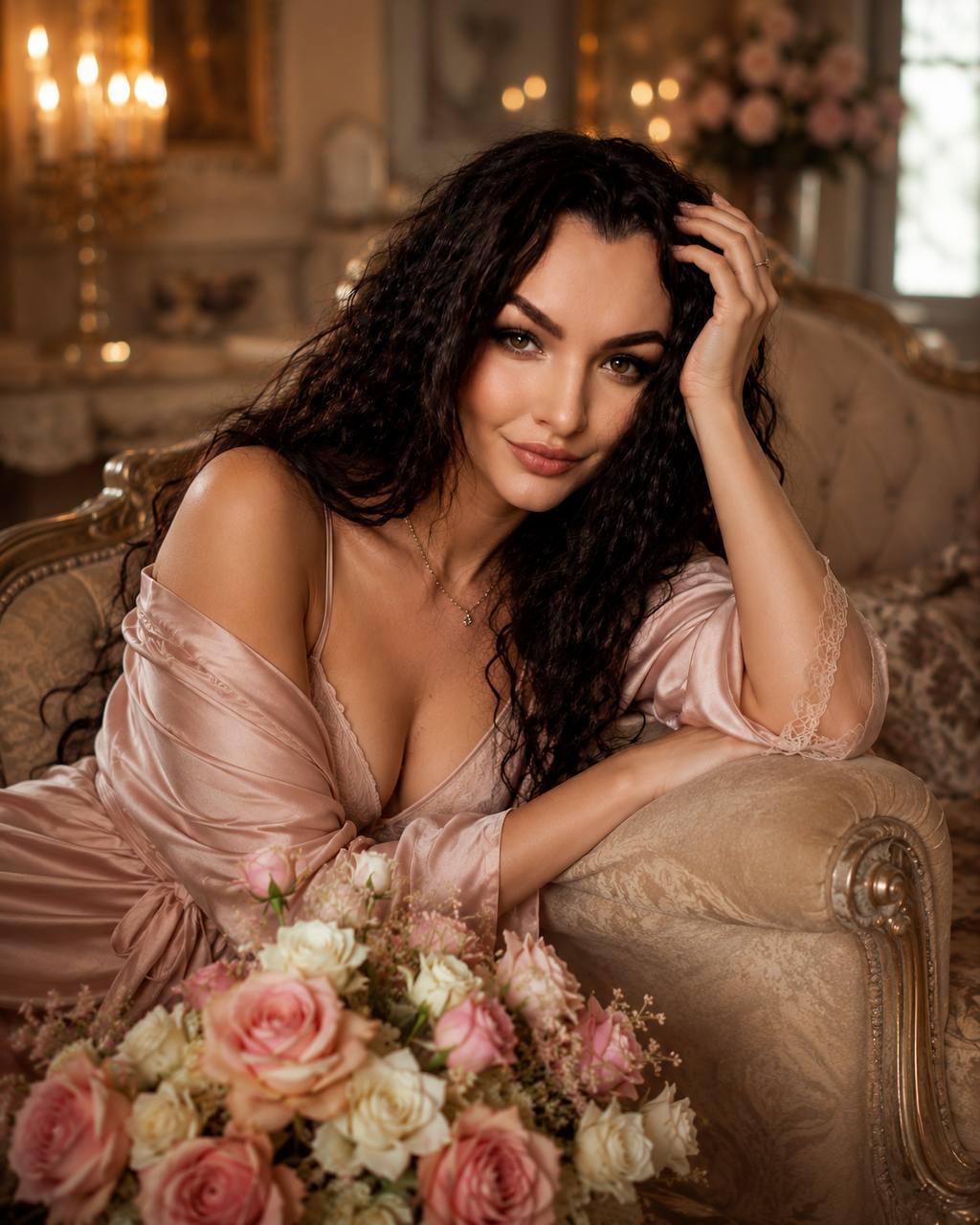
AI photography is a direction in visual content where artificial intelligence is used to create, modify, or expand images. It’s not just about generating a photo from scratch.
Modern AI tools allow you to work with existing photographs, change individual elements of an image, create new environments, add details, change lighting and style, and even turn one original idea into an entire series of visuals.
Put simply, AI becomes a kind of visual production tool. A person sets the idea and defines what the result should look like, and the technology helps bring that idea to life in an image.
For example, a brand has a product photo, but the plain background feels too simple. Instead of organizing a new photoshoot with props, you can develop a different visual concept and create an image where the product is placed in a completely different atmosphere — a minimalist studio, a luxurious interior, a natural scene, a seasonal composition, or an unusual advertising story.
At the same time, quality AI photography doesn’t come down to pressing a single button. The process usually consists of several stages. First, the task and visual idea are defined. Then a suitable composition, mood, lighting, environment, and other elements are chosen. After generation, the result must be carefully reviewed, because AI can make mistakes in details.
It’s especially important to check a person’s face, hands, fingers, jewelry, clothing, objects, text, and the geometry of surrounding objects. An image can look impressive overall, but a single small error can immediately give away the artificial origin of the picture.
That’s why AI photography is a combination of technology and creative work. The tool itself can provide a huge number of options, but it’s the person who decides which one truly matches the task.
What is AI photography used for?
The range of applications is quite broad. AI visuals can be used for websites, ad campaigns, social media, presentations, personal brands, online stores, product styling, and creative projects.
For example, a company might need a series of images for a new ad campaign. Instead of one standard shot, several related scenes can be developed, united by a single concept.
For a personal brand, the possibilities are just as interesting. You can create a visual series in a particular style that supports a person’s image and is used across different publications.
AI also allows you to experiment with ideas that are hard to achieve in regular photography. You can imagine a person in an unusual location, create a fantasy scene, or combine several visual elements that would be practically impossible to shoot at the same time.
Why is one generation usually not enough?
One common mistake is expecting AI to create a fully finished image on the first try.
In practice, a good result often appears after several attempts. That’s normal.
You may need to change the composition, lighting, facial expression, object position, background, or individual details. Sometimes the initial idea looks good, but after review it becomes clear that the image lacks space, contrast, or a certain accent.
So creating a visual can be compared not to automatic photography, but rather to a creative process where the desired result is refined step by step.
What’s especially important when creating an AI visual?
First — a clear idea. If it’s unclear what should be depicted and why, even a technically good generation can turn out useless.
Second — visual coherence. Colors, lighting, background, composition, and mood need to work together.
Third — fit for the task. An image for an ad banner and an image for a personal post can look completely different, because they serve different purposes.
Fourth — attention to detail. The more realistic a visual is meant to look, the more important it is to check small elements.
And finally, it’s important to understand exactly where the image will be used. A website might need a wide composition with space for a headline. A vertical video or Stories will need a different arrangement of objects. So a good visual is created not only with what should be in the image in mind, but also with where that image will be used.
Can AI fully replace regular photography?
AI doesn’t have to be seen as a replacement for traditional photography. It’s more of another tool that expands the possibilities of creating visual content.
Real photoshoots remain necessary in many situations, especially when you need to show a real object, person, or event with maximum accuracy.
At the same time, AI can be useful where you need to quickly test several concepts, create an unusual scene, get additional promotional materials, or bring to life a visual idea that’s hard to organize physically.
It’s exactly this combination of an idea, visual thinking, and modern technology that allows you to create content that stands out from an ordinary set of photographs.
Ultimately, AI photography’s value doesn’t lie in the technology itself. Its main advantage is that it lets you turn an abstract idea into a concrete visual image and experiment with it until the result truly matches the original idea.